
Which Roofing Materials Last the Longest? Data From Real-World Performance

When you’re investing thousands of dollars into a roof replacement, one of the most important questions you can ask is: How long will it last? While aesthetic appeal and cost play a role, long-term durability is what truly determines the return on your roofing investment. This article breaks down the real-world lifespan of different roofing materials—backed by national data and roofing industry benchmarks—so you can make the most informed decision for your Texas home.
Roofing Lifespan at a Glance: What the Data Shows
According to the National Association of Home Builders (NAHB) and the International Association of Certified Home Inspectors (InterNACHI), here's how long you can expect popular roofing materials to last under normal weather conditions:
- Slate: 75–150+ years
- Clay Tile: 50–100 years
- Concrete Tile: 50–100 years
- Standing Seam Metal Roofing: 40–80 years
- Synthetic Shingles: 40–50 years
- Cedar Shakes: 30–40 years
- Architectural Asphalt Shingles: 25–30 years
- 3-Tab Asphalt Shingles: 15–20 years
These figures aren’t just marketing fluff—they reflect decades of inspection reports, insurance industry data, and roofing manufacturer warranty ranges.
👉 Learn more about roof replacement options
What Makes a Roof Last Longer?
A material's rated lifespan is only part of the equation. Performance in the field depends on:
- Installation Quality: A poorly installed slate roof might last less than a well-installed asphalt one.
- Attic Ventilation: Improper airflow can cut shingle lifespan by 30% or more.
- Climate Exposure: Roofs in hail-prone or high-UV regions (like much of Texas) wear faster.
- Maintenance: Regular roof inspections help catch minor issues before they escalate.
Comparing the Longest-Lasting Roofing Materials
🪨 Slate (75–150+ Years)
Data Source: NAHB, Fine Homebuilding
Slate is stone—and that durability shows. It’s common to find European homes still using slate roofs that are over 100 years old. But weight and cost are key drawbacks.
- Warranty: Rare due to natural material
- Cost: Highest of the materials listed here
- Ideal Use: Forever homes, custom luxury builds
🧱 Clay & Concrete Tile (50–100 Years)
Data Source: Roofing Above All, First American Roofing
Both clay and concrete tiles are known for fire resistance and resilience against UV radiation and extreme heat. They're extremely popular in southern and coastal regions.
- Warranty: Often 50 years, sometimes limited lifetime
- Cost: High, below slate
- Cons: Heavy—may require additional structural support
👉 Explore residential roofing systems
🧲 Metal Roofing (40–80 Years)
Data Source: Metal Roofing Alliance
Standing seam metal roofs are increasingly chosen for their high wind and hail resistance. Their longevity also makes them a strong value proposition over time.
- Warranty: Paint finishes like Kynar often warrantied for 30 years
- Cost: Mid-range, above asphalt shingles
- Maintenance: Minimal if properly installed and ventilated
🧪 Synthetic Roofing (40–50 Years)
Data Source: Bill Ragan Roofing Company
Made from polymers or recycled materials, synthetic slate or shake products mimic the appearance of natural materials at a lighter weight and lower cost—with better impact resistance.
- Warranty: 40–50 year limited
- Cost: High, below slate
- Ideal For: Hail-prone zones, sustainability-conscious homeowners
👉 Ask about Owens Corning roofing systems
🧱 Architectural Asphalt Shingles (25–30 Years)
Data Source: CertainTeed, NAHB
As the most common roofing choice in the U.S., these shingles have improved significantly in lifespan and design in recent decades.
- Warranty: Typically 30–50 years
- Cost: Lowest of the materials listed here
- ROI: Great value for most homes
Real Performance: Insurance, Maintenance & Lifespan
In our experience handling insurance restoration and storm damage repair, roofing material plays a huge role in how well a roof stands up to hail, wind, and water infiltration.
- Synthetic and metal roofs tend to have Class 4 impact ratings, meaning better protection and often insurance discounts
- Asphalt shingles are more prone to granule loss and curling under extreme heat
- Slate and tile, while durable, are fragile during repairs and should be handled only by experts
This is why regular maintenance and free estimates are so critical in extending your roof's usable life.
Final Takeaway: What's the Longest-Lasting Roof for You?
If longevity is your #1 priority, here’s how the contenders rank:
- Slate – 75 to 150 years
- Clay/Concrete Tile – 50 to 100 years
- Metal Roofing – 40 to 80 years
- Synthetic Roofing – 40 to 50 years
- Luxury Asphalt Shingles – 30+ years
But remember: Your roof’s performance depends on more than the material. Proper installation, attic ventilation, routine maintenance, and storm preparedness all factor in.
Need help choosing the right material for your home and budget?
👉 Schedule a free estimate or contact our experts for a consultation

You can trust us to help you


The K&M Insider
Stay informed with the latest in roofing, insurance restoration, and exterior home improvements. From protecting your home after a storm to enhancing your outdoor space, our expert guides and industry insights help you make the best decisions for your property.

Contact us
Please reach out to us with any questions regarding the services we offer.
Office
Business Hours
Roofing Service FAQs – Everything You Need to Know
We understand that a full roof replacement is a significant investment for any property owner. However, delaying necessary repairs can lead to severe structural damage, costly disruptions, and even code violations. We offer flexible financing options tailored for your property, ensuring you get the protection you need without straining your budget.
In some cases, a repair may be a short-term solution, but hidden issues like trapped moisture, weakened insulation, and undetected leaks can worsen over time—leading to costly interior damage and disruptions. That’s why we conduct thermal drone inspections and moisture mapping to assess whether a repair is viable or if a full replacement is necessary. If a replacement is needed, we’ll help you navigate the insurance process and work with your adjuster at every step.
Yes, we provide tailored financing solutions for all types of properties. Whether insurance covers part of your project or you need additional financial flexibility, we offer financing options to help you budget effectively. A durable, leak-free roof is essential for protecting your assets and maintaining peace of mind, and we make it as easy as possible to afford the best solution for your home.
We give you clear, itemized pricing. Every estimate is written out line by line so you know exactly what you're paying for before work starts.
At K&M Roofing, we understand that trust is everything when choosing a contractor. With over 60 years of combined experience and a reputation built on integrity, transparency, and superior craftsmanship, we’ve earned the trust of property owners throughout the region. We are fully licensed, insured, and an Owens Corning Platinum Preferred Contractor, ensuring your project is in expert hands. Unlike out-of-town storm chasers, we’re a local company committed to long-term service, and our satisfied clients can vouch for our reliability and quality work.
The roofing industry, unfortunately, has its share of unreliable contractors. That’s why we prioritize transparency and accountability in every project. K&M Roofing provides detailed, written estimates, a clear scope of work, and absolutely no hidden fees. Unlike pop-up companies that follow storms, we have a long-standing reputation, hundreds of successful projects, and verifiable credentials. We encourage property owners to verify our licensing, read customer reviews, and compare us to other reputable contractors before making a decision.
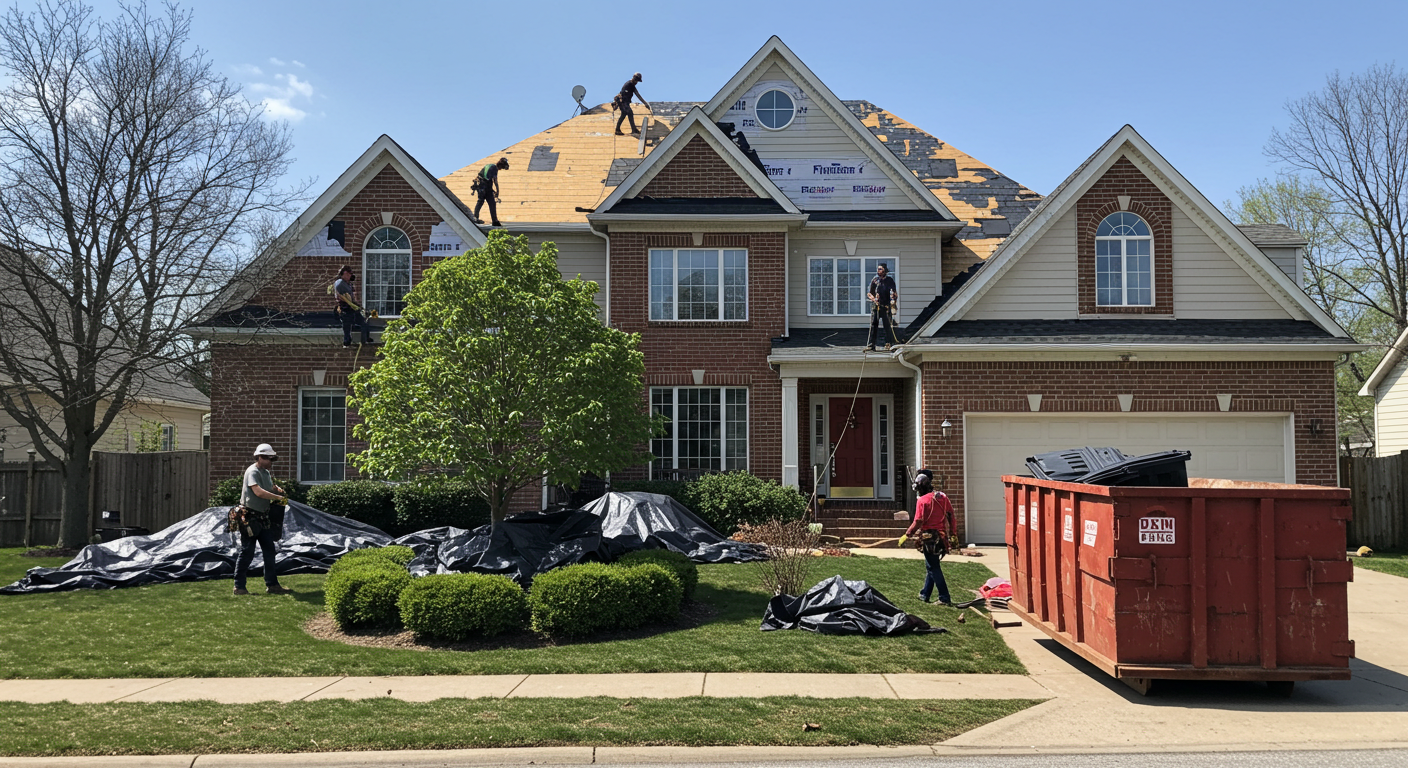
Yes. We know that roofing projects can disrupt usual activity, so we take every precaution to minimize downtime and protect your property. Our team secures job sites, safeguards HVAC units, and prevents debris from affecting your property. We use heavy-duty tarps, magnetic nail sweepers, and a strict cleanup process to ensure your property is left clean and hazard-free. Additionally, we coordinate with you to create a plan that allows for minimal disruption to your daily rhythms.
With K&M Roofing, there are no surprise costs or hidden fees. Our team provides detailed, itemized estimates upfront, so you know exactly what’s covered before work begins. If we uncover unforeseen issues—such as moisture damage or structural concerns—we bring them to your attention immediately and discuss the best solutions before proceeding. Our commitment is full transparency so you can make informed decisions without pressure or unexpected financial burdens.
Even if your roof isn’t actively leaking, hidden damage could be getting worse. Small cracks, seam separations, ponding water, and hail damage may not show immediate signs of failure, but over time, they weaken your roof’s structure. Left unaddressed, this can lead to interior leaks, insulation damage, mold growth, and costly repairs. Acting now helps prevent expensive damage to the quality of your property.
A professional inspection is the only way to know for sure. Signs that your roof may need replacement include: pooling water, deteriorating seams, membrane punctures, granule loss, or leaks. Even if everything looks intact, our team uses thermal drone scans and advanced moisture detection to identify hidden issues beneath the roof surface that could lead to major failures in the future.
Delaying necessary repairs can increase costs and reduce your roof’s lifespan. Small problems often escalate into major structural damage, causing higher energy costs, interior water damage, and safety risks for anyone on your property. A free inspection helps you understand the condition of the roof so you can decide what to do next.
Postponing roof repairs or replacement can cost more in the long run. Roofing material costs tend to increase year over year, making future replacements more expensive. A free inspection now helps document the current condition of the roof so you can plan on your own timeline. Ask your insurer about your policy if you have questions about storm damage.
An inspection soon after a storm helps document the damage while it is still easy to see. Ask your insurer about your policy and any timeframes that apply to you. We can inspect the property, take photos, and meet the adjuster on site. You work with your own insurer on next steps.
If your property has storm damage that your policy covers, involving your insurer can be worth it. Roof repairs and replacements are a major expense, and your policy is there to protect you. We start with a free inspection, document the damage with photos, and can meet the adjuster on site, so you can decide with clear information.
The timeline varies, and your insurer sets the steps. A typical sequence is: 1-3 days to contact your insurance provider; 1-2 weeks for the insurance adjuster to inspect the roof; 1-3 weeks for your insurer to review the documentation and possibly issue an initial payment; and 1-4 weeks after the work is complete for your insurer to possibly issue a final payment. We inspect, document the damage, and can meet the adjuster on site. You work with your own insurer on timing and next steps.
Insurance policies and premiums vary. Ask your insurer about your policy, including how storm damage is handled and any questions you have about next steps. We can inspect the property, document the damage with photos, and meet the adjuster on site. You work with your own insurer.
If you think damage was missed, you have options. We can provide a detailed damage report with photos and measurements, and a contractor on site during the adjuster’s inspection so the damage is documented. We inspect, document the damage, and can meet the adjuster on site. You work with your own insurer on next steps.
No—you can choose your own roofing contractor. Some insurers suggest preferred vendors, but the choice is yours. We inspect, document storm damage, and do the roofing. You work with your own insurer.
The timeline depends on the size of the property, the complexity of the roof system, and weather conditions. Most roofing repairs can take anywhere from a few days to several weeks. Factors such as material selection, existing damage, and the need for additional structural repairs can also affect the schedule. Before starting, we provide a clear project timeline so you know what to expect.
A successful roof replacement or repair requires a step-by-step approach to ensure long-term durability and minimal disruption. Our process includes:
- Identifying interior leak spots to determine the source of water infiltration.
- Comprehensive roof access & inspection to assess existing conditions.
- State-of-the-art drone inspection with thermal imaging to detect hidden moisture.
- Precision problem location & documentation for accurate repair recommendations.
- Addressing problematic areas with targeted repairs to extend the life expectancy of your entire roofing system.
Yes. We take extra precautions to ensure your property, including parking areas and landscaping, are protected throughout the project. Our team uses protective barriers, debris management systems, and thorough cleanup procedures to minimize disruption to the quality of your property.
If we uncover hidden structural damage, trapped moisture, or deteriorating insulation, we will immediately communicate our findings. We provide detailed documentation and solutions before proceeding so you can make informed decisions. Our goal is to prevent long-term damage and ensure your roof remains a reliable investment.
In most cases, it’s not necessary to be present during the installation. We work to minimize disruptions and can schedule work at convenient times for you. Our team will ensure all safety protocols are followed to protect your property while you continue with your daily activities. However, we recommend being available for any important communications or decisions that may arise during the process.
Yes, roof work can be loud, but we take measures to limit disturbances. We coordinate with property owners to establish quiet periods if necessary and use best practices to complete the work as efficiently as possible.
To ensure a smooth process, we recommend:
- Informing everyone who frequents the property about the project timeline.
- Securing valuable items or belongings that could be affected by vibrations.
- Designating an area for materials and crew access.
- Reviewing safety protocols with everyone at the property to ensure everyone feels comfortable and safe during the project.
Once your residential roof is installed or repaired, we:
- Conduct a final walkthrough and quality assurance inspection.
- Provide detailed documentation and warranty information for your records.
- Perform a thorough cleanup, including a magnetic nail sweep to ensure no debris is left behind.
Still have questions?
Contact us on our contact form or give us a call at (903) 870-6748 for any questions
Trusted and Certified by top industries nation wide



Get a free estimate
Our experts provide a free, no-obligation roof estimate and photograph the damage so you have a clear record.
